Today we drove to the border at Namanga to enter Tanzania from Kenya. Our good friend Christopher told us it was a "good road", but I guess it is all a matter of perspective. We've decided that traveling in a vehicle trumps walking mile after mile even if the road is bumpy, dusty and by our standards long! We laugh because no matter where we are going we hear the same comments from our drivers and friends. How far is it to Namanga? "Not so far". And....how are the roads? "Not so bad".
As we look back on our 16 days in Kenya, we realize that we met many wonderful people, visited schools and met teachers and parents that are working hard to give students the skills needed to change their communities, and witnessed an attitude of hope and conviction that life in Africa WILL improve!
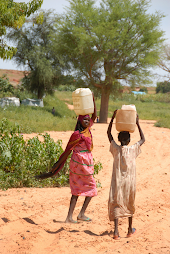
Through-out the miles that we have traveled, we must once again mention that we continually pass people carrying either empty containers on their way to find water, or full containers on the long journey home. We have discovered that Tanzania is also experiencing dry conditions, and our H2O for Life shirts always solicit comments. We receive words of thanks from people passing by, and questions about what H2O for Life is doing. When we tell them that SCHOOLS and kids are raising the majority of funds to bring water to our partner schools around the world, they are amazed and impressed. They also realize that our children and youth will be the leaders of the world and will "be the change".
Tomorrow, we visit St. Margaret's School in Arusha. We'll deliver penpal letters from Diamond Path Elementary School, Eagen, MN and spend time meeting the teachers and students. We'll take photos and check on the progress of the school water project. It'll be a great day!
We have a great day coming up for you too! Join us on April 16th for an annual "Walk for Water" to raise awareness and funds for schools around the world. You will find information on our website to help you plan a "Walk for Water" event. If you live in or around Minnesota, the "Walk for Water" will be held at Target Field, the home of the Minnesota Twins. The Pentair Foundation is our presenting sponsor, and the event will be a day to remember. Come walk around the new field, visit school exhibits, and perhaps have a chance to run the bases! Register for the event on our website.
April 16th is also Global Youth Service Day. Join the thousands of youth that are participating in events that make a difference in the world.
Monday, February 7, 2011


Sunday, February 6, 2011


A visit to a Masai Village and more
Today, following a morning game drive, and a visit to the local airstrip to pick up a friend, we visited a nearby Masai manyatta. We were greeted with singing by the women and men of the community. They were dressed in their traditional red cloth clothing and many beads from head to toe. The women make the beads, and sell them to tourists to help support the community.
Julius, our Masai guide showed us many interesting customs and procedures used by the Masai. He and several of the warriors showed us how to make fire using two sticks- hardwood of the acacia tree and soft wood of the cedar tree. Three of the men made a fire in a few minutes. (I'm sure campers can do something similar, but I was impressed). We saw a group playing a game of mancala using stones, and their hands were flying. Sometimes the winners walk away with additional cows or goats- but not today.
We visited a typical home made of mud and cow dung. The homes are made by the women there and takes 6 weeks to build. The hut will last approximately 10 years. Julius told us that many Masai continue to practice polygamy and many families share the same manyatta. Each wife has her own mud hut. Children in the enclave are welcome to sleep in any home in the manyatta. Masai girls, in recent years, must attend school which has made the marriage age later for most. In the recent past it was not unusual for girls as young as 13 and 14 to be married to much older men.
The children sang a song for us, recited the alphabet and solved several math problems using a stick as a pencil and the ground as the tablet. There are several government schools nearby, and some of the men and women had graduated from the schools and were well educated. They continue to choose to live a traditional life that has few frills. They normally eat grains, milk mixed with cows blood and goat or cow meat on special occasions. They told us that their biggest challenge is water- something we hear from every community throughout Kenya. They walk 10 Kilometers each way to the nearest bore hole. During this dry season, there is never enough!
We also had the opportunity to purchase hand made items from the women. It was a hard sell, and we didn't walk away without buying several items. We enjoyed the visit and learned much about the lives of these interesting, colorful people.
Tomorrow we head for Arusha and a visit to St. Margaret's school. St. Margaret's has many supporters in the Minnesosta area, and Diamond Path Elementary has sent many pen pal letters to be delivered. We look forward to the vist. Tanzania, here we come!
Julius, our Masai guide showed us many interesting customs and procedures used by the Masai. He and several of the warriors showed us how to make fire using two sticks- hardwood of the acacia tree and soft wood of the cedar tree. Three of the men made a fire in a few minutes. (I'm sure campers can do something similar, but I was impressed). We saw a group playing a game of mancala using stones, and their hands were flying. Sometimes the winners walk away with additional cows or goats- but not today.
We visited a typical home made of mud and cow dung. The homes are made by the women there and takes 6 weeks to build. The hut will last approximately 10 years. Julius told us that many Masai continue to practice polygamy and many families share the same manyatta. Each wife has her own mud hut. Children in the enclave are welcome to sleep in any home in the manyatta. Masai girls, in recent years, must attend school which has made the marriage age later for most. In the recent past it was not unusual for girls as young as 13 and 14 to be married to much older men.
The children sang a song for us, recited the alphabet and solved several math problems using a stick as a pencil and the ground as the tablet. There are several government schools nearby, and some of the men and women had graduated from the schools and were well educated. They continue to choose to live a traditional life that has few frills. They normally eat grains, milk mixed with cows blood and goat or cow meat on special occasions. They told us that their biggest challenge is water- something we hear from every community throughout Kenya. They walk 10 Kilometers each way to the nearest bore hole. During this dry season, there is never enough!
We also had the opportunity to purchase hand made items from the women. It was a hard sell, and we didn't walk away without buying several items. We enjoyed the visit and learned much about the lives of these interesting, colorful people.
Tomorrow we head for Arusha and a visit to St. Margaret's school. St. Margaret's has many supporters in the Minnesosta area, and Diamond Path Elementary has sent many pen pal letters to be delivered. We look forward to the vist. Tanzania, here we come!


Saturday, February 5, 2011
From Kathungu to the Bush
We have been out of computer contact for several days. We were visiting Kathungu Village- the starting point for H2O for Life. Five years ago, Christopher Mutuku asked for help for his community. Highview Middle School answered by raising funds to construct a sand dam for the community. Today, this sand dam has been enhanced and continues to provide water to Kathungu village. Kenya has had several years of low rainfall, and times are hard. It was wonderful to see that the efforts of students has helped this community tremendously. The students that continued on to Irondale High
School also funded a rainwater catchment tank for Kathugu School. A visit to the school confirmed that the tank is working and will provide enough water for the school for the year. The teachers also told us that because of access to improved water, attendence has increased as illnesses have declined.
As we toured the school, we were greeted by smiling, happy children. Thank you to all of you that contributed to the "soccer ball fund". Every school that has received a soccer ball has been delighted!
We also visited the girls latrines. They were awful, and they need work! We have asked the community and our friends at Kenya Rainwater Association to prepare a proposal outlining what is needed to improve the latrines for the school. The latrines are almost full, smelly and very unappealing. They also do not provide privacy. The teachers pleaded with us to please consider helping Kathungu secure funds needed to rehabilitate the latrines. Maybe you and your school are interested? Let us know!
We attended a celebration and commissioning of a shallow well, pump and cattle trough placed near the original sand dam project. This project was proposed by a local women's group in the area. The women and communty provided the sand, the rocks and the digging that needed to be done for the project. The project is named "Hall's Well", and I am honored. The pump allows the women and girls easier access to water and is more time efficient. It also provides clean water!
Following the commissioning of the project, we shared an African meal prepared by the local women's group. Sukuma-wiki, Ugali, and other dishes were enjoyed by all.
We spent our evenings talking with community members and playing UNO with the neighborhood children. Life is very basic in the village, but also a welcome break from the hustle and bustle that we usually experience.
We experienced many cultural differences while in the village. We are used to everything running on time, and that does not happen. We were scheduled to leave Nairboi at 10am, and finally left the hotel around 2. The celebration at the river was to begin at 10 and began around 12:30! Dinners that were planned for 7, sometimes happened at 9. We often were waiting for something to happen, but we weren't quite sure what that would be. It was an exercise in patience for us. We have learned that there really is "African Time". As my close friends read this, I know they are laughing as I am the most impatient of people. We have gradually learned to be a little more patient, and to not let the "time" interfere with the experience.
Today we are at Amboseli Reserve. It is a dry area, however, the springs and marshes that are tucked away are home for large groups of elepants and other animals. We saw elephants enjoying a cool bath and playtime for the young ones at a small pond. For us, it felt great to have a warm shower after a long day on dusty roads and days of bathing from a bucket!
One more day at Amboseli before heading to Tanzania.
Kwaheri!
School also funded a rainwater catchment tank for Kathugu School. A visit to the school confirmed that the tank is working and will provide enough water for the school for the year. The teachers also told us that because of access to improved water, attendence has increased as illnesses have declined.
As we toured the school, we were greeted by smiling, happy children. Thank you to all of you that contributed to the "soccer ball fund". Every school that has received a soccer ball has been delighted!
We also visited the girls latrines. They were awful, and they need work! We have asked the community and our friends at Kenya Rainwater Association to prepare a proposal outlining what is needed to improve the latrines for the school. The latrines are almost full, smelly and very unappealing. They also do not provide privacy. The teachers pleaded with us to please consider helping Kathungu secure funds needed to rehabilitate the latrines. Maybe you and your school are interested? Let us know!
We attended a celebration and commissioning of a shallow well, pump and cattle trough placed near the original sand dam project. This project was proposed by a local women's group in the area. The women and communty provided the sand, the rocks and the digging that needed to be done for the project. The project is named "Hall's Well", and I am honored. The pump allows the women and girls easier access to water and is more time efficient. It also provides clean water!
Following the commissioning of the project, we shared an African meal prepared by the local women's group. Sukuma-wiki, Ugali, and other dishes were enjoyed by all.
We spent our evenings talking with community members and playing UNO with the neighborhood children. Life is very basic in the village, but also a welcome break from the hustle and bustle that we usually experience.
We experienced many cultural differences while in the village. We are used to everything running on time, and that does not happen. We were scheduled to leave Nairboi at 10am, and finally left the hotel around 2. The celebration at the river was to begin at 10 and began around 12:30! Dinners that were planned for 7, sometimes happened at 9. We often were waiting for something to happen, but we weren't quite sure what that would be. It was an exercise in patience for us. We have learned that there really is "African Time". As my close friends read this, I know they are laughing as I am the most impatient of people. We have gradually learned to be a little more patient, and to not let the "time" interfere with the experience.
Today we are at Amboseli Reserve. It is a dry area, however, the springs and marshes that are tucked away are home for large groups of elepants and other animals. We saw elephants enjoying a cool bath and playtime for the young ones at a small pond. For us, it felt great to have a warm shower after a long day on dusty roads and days of bathing from a bucket!
One more day at Amboseli before heading to Tanzania.
Kwaheri!
Tuesday, February 1, 2011


Last day on the Mara
Yesterday we went on an all day game drive across the Masai Mara. The animals are not as plentiful at this time of the year as most have migrated to Tanzania. There are the faithful "residents" that reside on the Kenya side year round. We had a great day driving across this great expanse of land. We saw many elephants, lions, giraffe, zebras, gazelles of all types, and many different antelopes. We also visited a hippo area of the river. They are monstrous when up close, and from what the ranger told us, they are very dangerous. They can run fast-who knew?- and they don't like to be disturbed.
We walked the hippo trails (escorted by a ranger with a very big rifle) up and down along the riverside. The hippos have very sensitive skin and avoid the heat and sun of the day, and the trails are used to head to the grass in the evening to eat and are used by the wildebeest during the migration. Steep hills, and treacherous footing. No wonder so many wildebeest are injured on the trek down to the river, and then are snapped up by the crocodiles once in the river. We did see several large crocs as well.
On the long road back to Nairobi, we saw many people carrying water, and water containers for sale at every store along the way. Water is never far from anyone's mind, and always must be on the daily
"to do" list. I counted numerous water projects in progress as we drove along- which is good to see. I do think that the government of Kenya is trying to increase the water coverage for the people. There is still much to do.
Please consider organizing a walk for water for your school, youth group, church or community and join H2O for Life on April 16th to raise funds for schools around the world. If you need help getting started, please contact us! We are ready to give you ideas and resources that will help you plan a successful event. Bringing water to schools changes lives and opportunities for students. YOU can help!
Kwaheri! (good-bye)
We walked the hippo trails (escorted by a ranger with a very big rifle) up and down along the riverside. The hippos have very sensitive skin and avoid the heat and sun of the day, and the trails are used to head to the grass in the evening to eat and are used by the wildebeest during the migration. Steep hills, and treacherous footing. No wonder so many wildebeest are injured on the trek down to the river, and then are snapped up by the crocodiles once in the river. We did see several large crocs as well.
On the long road back to Nairobi, we saw many people carrying water, and water containers for sale at every store along the way. Water is never far from anyone's mind, and always must be on the daily
"to do" list. I counted numerous water projects in progress as we drove along- which is good to see. I do think that the government of Kenya is trying to increase the water coverage for the people. There is still much to do.
Please consider organizing a walk for water for your school, youth group, church or community and join H2O for Life on April 16th to raise funds for schools around the world. If you need help getting started, please contact us! We are ready to give you ideas and resources that will help you plan a successful event. Bringing water to schools changes lives and opportunities for students. YOU can help!
Kwaheri! (good-bye)
Subscribe to:
Posts (Atom)