Wednesday, March 21, 2012

Progress in Kenya

H2O for Life partners with Waterlines to implement WASH projects in Kenya.  Recently, Mark and Diane Reimers visited Kenya on behalf of Waterlines to complete a sustainability check on projects.
While there, they took a moment to interview several students about their lives, and the changes in their lives due to access to improved water, sanitation and hygiene education. 


Kiminanga School in Kenya

 
Mark and Diane Reimers, representing Waterlines and H2O for Life recently visited WASH in Schools projects in Kenya as part of a yearly site visit to Waterline’s projects. While visiting Kimananga School, teacher Lisa, helped conduct an interview with students. Mark and Diane talked with Edith Chentutai Class 6 and Aaron Kipyegon Class 6.

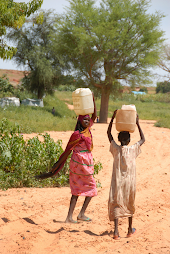
Edith and Aaron enjoy reading and playing futball when they are not in school. They are required to fetch water for their parents and family, Edith from a family of 8 members and Aaron from a family of 7 members. They pick the water from dams about 20 minutes away and carry the containers by hand or on their heads. The water is boiled for drinking and used for cleaning around the homes. Edith washes clothes every day for the family. It is much easier now that the students have access to water through a rainwater catchment system with a storage tank located on the school grounds.


Edith and Aaron spoke of another job that is unfamiliar to students in the United States. They “smear” the classroom floors and also their floors at home. The reason they “smear” is to control chiggers (mbuiukik), cockroaches and fleas (kimitek). If they do not smear, “the insects are too many.”

The mixture used for smearing consists of water, soil and cow dung. It is mixed in a basin by hand and then is smeared on the soil by hand or smeared with a broom.

Students have learned to pick up all rubbish and use a rubbish bin and a burning pit, and have learned to keep their classrooms clean.
The Health Club has taught the other students about dust bins and picking up rubbish in each
of the classrooms and on the compound. They dug a pit and they burn the rubbish there. They have planted trees and other bushes to make the place beautiful and to make oxygen for good breathing. The tank makes watering the plants easier.

Maurine Chelangat Langat – class seven and Nelly Chepngeno – class eight were asked to describe the toilets. The old toilets were “dangerous”. They could not be cleaned and had flies even though they put ashes in them. During rainy season they were muddy and slippery. They were afraid to use the toilets. When they needed to make a “long” or a “short” visit they would go back in the bushes behind the school. The new toilets can be cleaned easily with a brush and disinfectant. The floor does not get muddy. Maurine said; “We must teach the younger children how to use the toilet.”

Chemutai Stacy and Kigen Robinson are in Class eight. They described their job of filtering all the water through the bio-sand filter. Chemutai said; “Up to 2 years ago we were to bring water to school.” They went to the dam to get the water and carried it to use for drinking, washing and smearing. Sometimes the water for drinking at home was boiled. Sometimes it was not! NOW they may bring water to school (or get from the tank) and put it through the filter and take the clean, safe water home. Their containers now take good water home for use. The classes rotate days when the filtered water will go home. The students relayed that they are responsible at different times for cleaning the bio-sand filter. They clean the diffuser plate, carefully handle the algae layer, remove the top layer of sand to a basin where they use 2 liters of water, 3 times to wash the sand until it is clear. Then they place it back in the filter, add algae and the diffuser. The filter is now ready to work.

To be effective the bio-sand filter must be active. According to the teachers, keeping the sand filter active on the weekends and during school breaks “is not a problem.” There is always someone on the compound (this school appears to be quite open and the community feels welcome.) Waterlines had been told by Tenwek that some schools have rejected the bio-sand filters because it requires constant attention.

Tenwek Hospital, through Waterlines funding provides Child to Child training workshops for the headmasters and teachers, and often groups of student leaders. The training focuses on sanitation and hygiene education for the schools.


QUOTES from the Head Teacher Joseph K. Ngeno

“C-C (child to child) workshop and teaching AND the recent Head Teacher training is of great benefit. There is a great understanding throughout the school.

We have newcomers to the school because the students want to come to a place that is good.

The school is a resource center now; a place of interest. We thank Waterlines, H2O for Life and Tenwek because we are not what we used to be.”

Box 562

Sotik, Kenya


Wednesday, March 14, 2012

H2O for Life Celebrates World Water Week with stories from the field!

Next Thursday, March 22, please celebrate World Water Day with H2O for Life. For the past 5 years, H2O for Life has partnered with implementing partner, El Porvenir, in Nicaragua.  Rob Bell, the country director has been a pleasure to work with.  Several years ago, Patty Hall and Diane Klett, from Highview Middle School, MN signed on for a volunteer work trip through El Porvenir.  It was a trip of a lifetime.  We helped build a wash project for a community near San Lorenzo.  The structure provided a private bathing area, a place to wash clothes and access to clean water.  While visiting, we visited several H2O for Life school projects and were delighted to witness the difference that water and toilets make for a school.  Water changes everything!  If you are looking for a great experience for your school, your family or for you- check out El Porvenir.  Rob and the guides that were with us on the jouney were top notch.  We spent 6 days in the local community and then had a few days to see the volcanos and the rain forest areas.  Experiencing a zipline though the trees among the howler monkeys was an unforgettable moment.

If you haven't chosen a school partner through H2O for Life, NOW IS THE TIME!  There is plenty of time to learn about the global water crisis, and help a school that is in need of water.  Celebrate World Water Day by making a commitment to help!

Rob and his on the ground team in Nicaragua provided a look at the story of one young girl attending an H2O for Life partner school. 
Escuela Jose Marti, Nicaragua


H2O for Life and El Porvenir work in collaboration to provide WASH in Schools projects to schools in Nicaragua. Rob Bell and his team provided information about the impact of WASH on one local student from a school.

Escuela Jose Marti is located in the Camoapa area of Nicaragua in the town of Salgado. The school was built in 2000 by the government. It is one large room that is divided into two by a wooden wall. The school is concrete with a tiled floor and tin roof. It is blue and white and has shuttered windows that allow for ventilation during classes. The government also drilled a well for the school and built 2 latrines, however, they deteriorated and the well was no longer working. The community has committed to maintain the well and learn to take care of the latrines.

Raquel del Carmen Romero Garcia is fifteen. She has four siblings and lives with her mother, father and four siblings. She lives in a humble home made of wood with a tin roof and a dirt floor. There is a living room, kitchen and one bedroom. Her daily diet consists of beans and rice and once in a while, chicken. When fruits are in season, they add oranges, mango, guava and sweet lemons to their list of foods. The surrounding area is hilly with steep slopes. Raquel lives 5 km from Escuela Jose Marti.

Raquel relates that she has studied all her life in Escuela Jose Marti. She studies hard and says that mathematics is her most difficult class. She must walk an hour to and from school. She had to stop attending school for two years when her family had to move into the bush due to her father’s work.

When El Porvenir came to the village all the community was asked to help. Raquel tells us that her father contributed two work days per week until the well was completed.

Raquel tells us that when the well was not working, she had to go ask nearby homes to provide water. Sometimes the families had no water to give and the children went without until the end of the day. She said that by the time she returned home she was exhausted.

There was a watering hole nearby, but the water was not potable. The children carried the dirty water to the school to clean the school each day.

Today Escuela Jose Marti has a new well and new latrines. Here is what Raquel had to say:

“To have water is to have life, because without water, we cannot live, because we need it to carry out all our daily activities. Having the water closer makes me very happy because one of my duties is to clean the school every Friday and having access to water means I can participate more effectively in that activity.”

She also said;

“El Porvenir has helped a lot because the projects they develop benefit the environment; take care of the water and especially the health of the people.”

Raquel expresses that she listens to the El Porvenir radio program every Wednesday morning and from that has learned many things about personal, family and community hygiene. The project has been in place for 2 years now in the school and the community commitment is to maintain the well area, water the plants and trees in the school (so it looks nice around the well) and to be careful in the use of the rope pump so it lasts a long time. The parents have been maintaining the well.

Raquel’s opinion is that the money that was donated by H2O for Life and El Porvenir to this project was well invested and the construction of the well is very important. Also the latrines and washing and bathing station are very important, especially in the schools because that is the medium for teaching and changing habits and customs.

Raquel ended by saying, “As a student, I feel happy to be able to go to school every day, because I can learn something new and different every day.”

The well at Jose Marti


                                                  Building a Wash station on a volunteer trip


Students from Nicaragua

Friday, February 17, 2012

Walk for Water on EARTH DAY and celebrate Global Youth Service Day


For all of those schools out there that are looking for a great event for your H2O for Life current school project- or if you are a new school and would like to participate- we have just the event for you!

Walk for Water

What activity could be more connected to the issues of the global water crisis?

Every day, women and children walk miles, multiple times daily to collect water- often contaminated water- for their families.  Girls miss countless hours of school due to the hours spent walking.  Girls also tend to stop attending school upon reaching puberty if there is not an adequate latrine available at school.  Help H2O for Life change that statistic, while "providing service" on Global Youth Service Day.  Take the opportunity to feel what it is like to walk 3 miles carrying water!  Join the over 1 million youth engaged in service on Earth Day week-end. (April 20-22)

H2O for Life has materials available that can help you organize your walk.  We have a walk guide, walk posters, pledge sheets and more so that you don't have to recreate these resources.  We are also available to talk with you if you need further information! Now is the time to begin raising awareness in your school and community about the water crisis and service on GYSD. (register your project with ysa.org and be counted!)

Take a look at our short PP about walking for water:


Use the PP to engage others in your project.

Please let us know if we can help you organize a walk for water.  email us:
info@h2oforlifeschools.org   or give us a call: 756-7577  We are happy to help you get started!

Sunday, January 29, 2012

Walk for Water for World Water Day and Global Youth Service Day

Are you looking for a great activity to do with your students? 
Please join
 H2O for Life and  "Walk for Water"
If possible, schedule your walk between
 March 22- World Water Day, and April 22- Earth Day and Global Youth Service Day.


A Walk for Water is easy to organize and an effective way to raise local community awareness about the global water crisis while raising funds to support a school in a developing country that deperately needs water.

How Can You Get Involved?
  • Engage Participants!  Enlist participation from your classroom, school, group of friends, church, family- get the theme?  Any group can organize and participate in a walk for water.  The more people that you can gather to join you, the better it will be, but remember: a small group of people can make a difference. 
  • Set the challenge.  Can each individual gather a certain amount of donations?  $20, $50, maybe $100!  Remind them that through H2O for Life, their dollars are matched by the implementing NGO organization, doubling the amount raised.
  • Choose a school from our partner list:: http://www.h2oforlifeschools.org/partnership-information/available-schools/public-schools/  OR you may donate proceeds to a "school in need". 
  • Plan your walk with the help of our walk guide that is available online.  You'll find flyers for the event, pledge sheets and a guide that will provide tips for creating an amazing event. 
  •  walk guide: http://www.h2oforlifeschools.org/resources/curriculum/walk-guidlines/
  • Pick a date and have a great time while raising funds that will change lives for students in your partner school!
  • Take photos and write a short story about your event that we will share with our facebook and website  followers.   We love to publicize success!
  • Would you like to order t-shirts?  We can help you with that.  Please contact us at: info@h2oforlifeschools.org   We work with a company that will provide affordable t-shirts for your walk.

READ the story about a school that participated in a walk last school year!

http://www.h2oforlifeschools.org/2011/06/st-anthony-middle-schoolers-raise-10000-for-h20-for-life/


Can't walk between March 22- April 22?  Not to worry!  Schedule your walk before the end of the school year, and help a school receive water!  Every dollar makes a difference.  Be part of the solution!
Make it part of your school year to organize a walk for water every year!
The solution is within our reach, and we CAN make it happen!

Monday, January 9, 2012

Happy New Year! Start out the year with a MLK day outreach with your school

Happy New Year to all our H2O for Life friends.  We hope you had a restful holiday and are ready to ramp up your school projects.  Martin Luther King Day will be celebrated on January 16th.  For many school districts, it is no longer a day off, but a DAY ON focusing on service.  We have several ideas that you can use to raise awareness in your school and in your community about the water crisis. Also, please visit our friends at ysa.org to learn more about a Semester of Service beginning on MLK day.

Create a WATER DROPLET WALL.  I know that we mention the wall idea often, but it is so easy and so effective!  Students cut water droplets out of blue paper and go into action, selling each drop for $1.00.  (you ,of course, can charge more if you wish)  Encourage students to write a message on the drop,or have a message already printed that just requires a signature, such as- everyone needs water!  The wall is an impressive visual for students, teachers and parents to see as they enter your school.


We also encourage an initiative called:  Tap into Tap Water.
http://www.h2oforlifeschools.org/download/_2011/H2O_TapIn_Flyer_LTR.pdf

The flyer will tell you everything you need to know to raise funds through drinking tap water.

It's never too early to begin publicizing your H2O for Life connection.  Even if you are not planning to organize an event until spring, these ideas can raise awareness and jump start your project.

If you have other great ideas that have worked for your school please share them with us.  We are always looking for ideas that other teachers can use.

Again, Happy New Year, and let's all make it a great one!

Wednesday, November 23, 2011

Stillwater Junior High Raises the bar!

Stillwater Junior High School, located in Stillwater, MN recently hosted a terrific event.  Students read the book, "They Poured Fire on us From the Sky", and then invited "Lost Boy" speaker John Dau to speak to the community in Stillwater.  Over 500 people attended the evening event and learned about the hardships endured by Dau during his relocation from Sudan.  Students were amazed at his story.  In conjunction with the book, Stillwater Junior High is raising funds to help build 2 wells for South Sudan.  They have already raised over $7500 this year, with a goal of $10,000!  Teachers and students, along with project lead teacher Sara Damon- we salute you and your efforts!

The video below shares a few commens by students and John Dau.

http://www.kare11.com/video/default.aspx?bctid=1267583311001

Friday, November 18, 2011


World Toilet Day- 2011


World Toilet Day should be about demanding better work, better results, and more thoughtful programming.
Lend your social networking voice via Twitter or Facebook to raise attention to World Toilet Day.

 I wanted to share with you a provocative article that Water For People's CEO, Ned Breslin wrote in response to the usual clamor around World Toilet Day, "More Funding for Sanitation Projects," as is echoed in this article in the Independent. I hope you'll find Ned's response, which was published by AlertNet, thought provoking and informative.

Commitment to Everyone – My Wish for World Toilet Day

By Ned Breslin


This Saturday, November 19, we will celebrate World Toilet Day. The day has been vital to raising awareness about the 2.6 billion people worldwide do not have access to a hygienic toilet.

Not having a toilet is a disgrace and a major health catastrophe, directly contributing to the death of approximately 4,000 children worldwide every day.

Yet coupled with this public health disaster is the growing realization that the Millennium Development Goal (MDG) for sanitation is perhaps the most off track MDG target of all.

The MDGs are eight measurable goals to be achieved by 2015 established by the United Nations (U.N.) in 2000 to try and alleviate global poverty.

Massive global sanitation problems combined with the utter failure to even remotely reach MDG targets place the sanitation sector at a crossroads.

I have worked in sanitation for over 20 years, and today was another sad day like too many other sad days I have encountered when focused on sanitation. I spent this morning with Palmiera, a mother who lives in the mountains of Bolivia.

She shows me a small building that is immaculately constructed with brick and cement next to her house. As I come around the corner I see it is a toilet, with a large international NGO (nongovernmental organization) logo, with a smaller foreign aid donor emblem just below, painted on the side to pronounce to the world the NGO and donor’s benevolence and presence.

Entering the toilet, my heart sinks as the latrine is broken – the toilet seat is so dirty that dust flies everywhere as I open it, the water needed to make the toilet work had stopped flowing years ago, and the toilet was now a shed to store the family’s agricultural commodities that will eventually be sold. It’s a toilet in theory only.

Set against this failure at Palmiera’s house – which is hardly unique – is a shallow debate about foreign aid that states simply that billions of people do not have safe sanitation (true) and that the solution is more foreign aid that is better targeted at countries who are most off track in terms of sanitation coverage (questionable at best).

Aid, it is argued, is not only misaligned but most importantly not sufficient to create a world where every family, every school and every clinic has access to a toilet that removes pathogen-rich feces from the immediate environment.

We are losing the battle, it is argued, because governments worldwide are not playing their part, not contributing enough to rid the world of this horror.

Talk to the most thoughtful field practitioners in the sanitation sector and you might be surprised to hear that the math that reads low sanitation coverage + increased foreign aid = more sustainable sanitation access does not really add up.

Why?

Well, we have tried pushing money into sanitation for decades with little effect. Some would even argue that foreign aid for sanitation, which has almost always translated into latrine construction projects despite overwhelming evidence that such approaches do not work, has fundamentally distorted the sanitation market to the detriment of the poorest.

Just ask Palmiera, as foreign aid did not help address her sanitation problem at all. Her toilet was built, it does not work, and Palmiera is no better off as a result of this investment.

My wish for World Toilet Day is consequently somewhat different from all the noise that you will hear on this extremely important day. The noise will focus on raising awareness of the sanitation problem worldwide and pushing people to donate more and more money to eradicate sanitation poverty.

But sanitation agencies do a disservice to the people they work with around the world like Palmiera if the latrines that actually are built do not work or last. They do a disservice to American taxpayers and philanthropists when they take money for transformative work that fails to transform.

And they run the risk of discrediting the entire sanitation movement if World Toilet Day does not demand better work, better results, and more thoughtful programming from those shouting the loudest for more money.

Conventional sanitation aid needs to be radically overhauled and progress monitored over time. New philanthropy understands that the problem is not that we do not have enough money for sanitation aid but rather that the money we actually have is so poorly spent.

Catalytic investments that minimize latrine subsidies and try to create sanitation markets supported by local businesses show great promise without a single dollar of aid being used for latrine construction.

Initiatives like Community-Led Total Sanitation appear to be scaling in some of the poorest parts of the world with significantly less financial requirements than was once considered just and reasonable because these programs tap into local financial resources for solutions rather than relying on conventional aid.

And the creative use of local financial institutions and microfinance continue to show an alternative funding model that does not require on-going foreign aid support.

The sanitation sector needs to change its tone, from demanding more money to demanding to be held accountable for better results from communities in developing countries and donors and philanthropists who want their investments to truly solve the global sanitation crisis.

We need to think differently about the reasons why 2.6 billion people do not have access to sanitation worldwide and have the courage to accept that we, as a sector, have failed far too many people like Palmiera.

World Toilet Day will be a great success if those of us on the frontlines of this sanitation battle commit to a new way of working, with greater transparency and more thoughtfulness, so that the next time Palmiera gets a latrine she has it for life.

Submitted by:
John Sauer

Assistant Director Thought Leadership

Water For People